Why Career Guidance Matters Before Studying Abroad in 2026: A Complete Guide for Students and Parents
Studying abroad is an exciting opportunity that can transform a...
Read More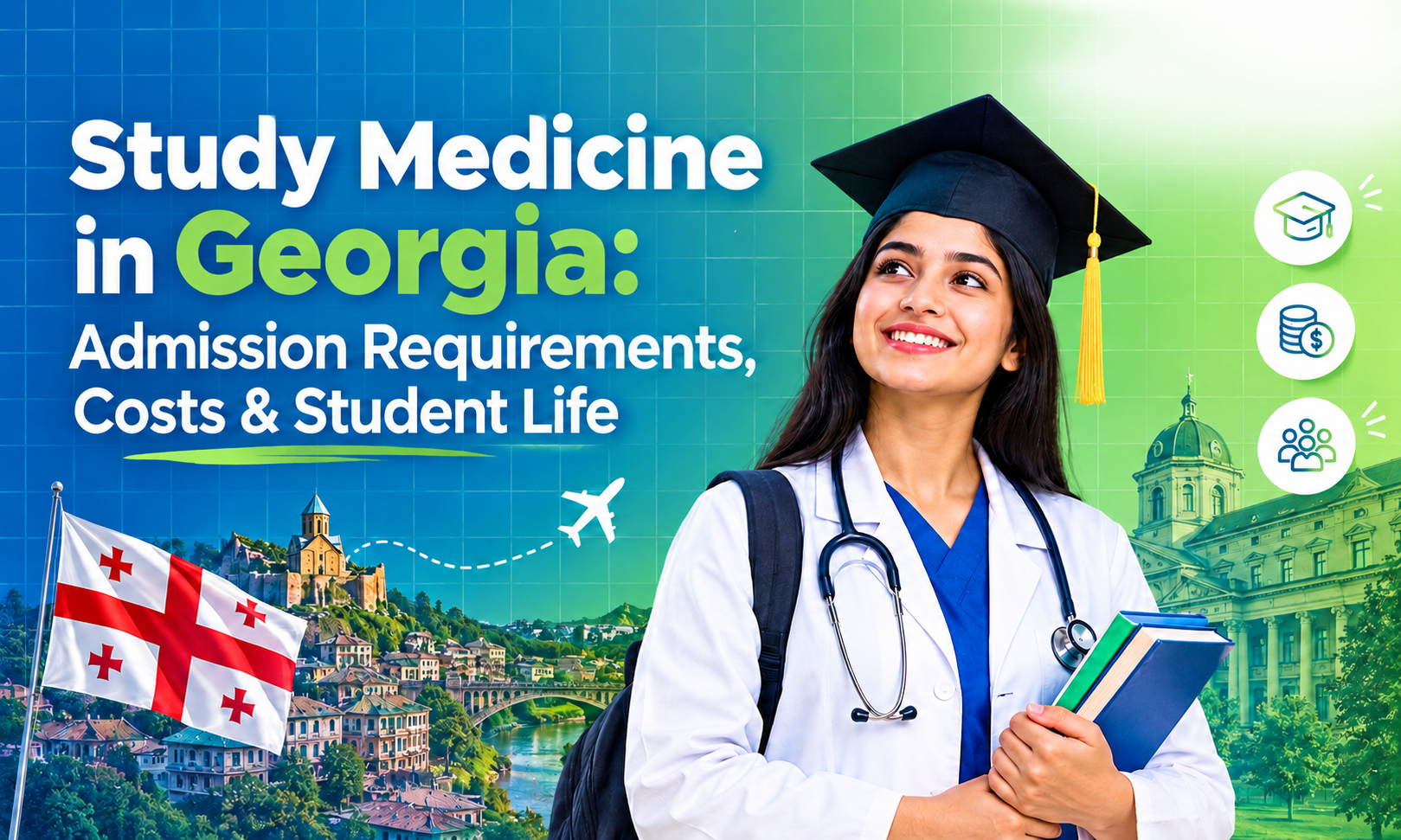
For students planning to pursue Medicine abroad in 2026, Georgia has become a destination worth researching. With English-taught medical programs, international student communities and universities offering structured medical education, Georgia can be an option for students looking beyond their home country.
However, choosing a medical university should involve more than looking at tuition fees or the name of a destination. Students and parents should carefully review admission requirements, program structure, total costs, clinical training, accommodation, and future academic or professional plans before making a decision.
In this guide, we explore some of the key things students should know when considering studying Medicine in Georgia.
Georgia offers medical programs designed for international students, including English-medium options. For example, the University of Georgia lists a six-year, 360-ECTS Medicine program taught in English, leading to a Medical Doctor qualification.
Other institutions also offer English-taught medical education. Caucasus University, for example, describes its Medical Doctor program as a six-year, 360-ECTS program, with basic sciences, clinical courses and clinical internship included in its curriculum.
For an international student, the availability of English-taught programs can make Georgia an option to investigate when comparing medical education destinations.
Admission requirements can vary depending on the university, program and the student's educational background.
International applicants generally need to provide academic documents such as a high school certificate, passport and other supporting documents. Some universities may also require evidence of English proficiency and additional assessments.
For instance, the University of Georgia currently lists a passport, high-school certificate, photograph, application-related documentation and other requirements as part of its international application process. The university also states that applicants may need to complete English and program-specific online examinations.
Caucasus University states requirements including secondary education and English-language proficiency for its English-taught Medical Doctor program. Its published information also includes document requirements for international applicants.
Therefore, students should always check the latest admission requirements directly with their chosen university before applying.
One of the most important questions for families is the total cost.
Tuition fees vary between universities and programs. For example, Caucasus University currently lists a tuition fee of USD 6,000 per year for its English-language Medical Doctor program.
The University of Georgia also publishes tuition information for its programs, with its current pages distinguishing between fees for Georgian national-exam students and international students.
However, tuition is only one part of the overall budget.
Students should also consider:
Before paying an admission deposit or tuition fee, ask the university or authorized representative for a complete and current fee structure.
Medical programs typically combine theoretical education with practical and clinical learning.
Caucasus University's published curriculum, for example, includes basic/preclinical courses, clinical courses and clinical internship within its 360-ECTS program.
The University of Georgia also highlights its medical learning environment and describes access to simulation-based and real-life medical learning experiences.
Students should therefore ask specific questions about where clinical training takes place, when it begins, what hospitals or facilities are involved, and how practical education is organized.
Moving abroad for Medicine is not only an academic decision. Students will also experience a different culture, lifestyle and environment.
International students should research:
The transition to a new country can be easier when students prepare for daily life before travelling.
Admission is only one part of the process.
International students may need to complete additional procedures involving academic document verification, university enrollment, visa-related documentation and residence requirements.
For example, the University of Georgia explains that international students may receive support related to visa invitations and residence permits, while also specifying health-insurance requirements.
Because immigration and university procedures can change, students should verify the current requirements with the university and the relevant authorities before travelling.
Before applying, students should create a checklist and compare universities based on factors such as:
1. Program: What is the duration and curriculum?
2. Language: Is the medical program taught in English?
3. Recognition: Does the university and program meet the requirements relevant to your future plans?
4. Clinical training: Where and how is practical training conducted?
5. Fees: What are the tuition and additional costs?
6. Admission: What academic and language requirements apply?
7. Student support: What assistance is available for international students?
8. Future plans: What requirements may apply if you intend to continue your medical career or education in another country?
These questions can help students compare options based on their own academic and career plans rather than choosing solely on tuition fees or promotional information.
Choosing to study Medicine abroad is a major decision for both students and parents. From selecting a suitable university to preparing documents, understanding admission procedures and planning for life abroad, there are several stages that require careful attention.
Working with an experienced study abroad consultancy in Abu Dhabi, UAE can help students understand their available options and organize the admission process.
At EduCare International, we guide students and parents through university selection, admission assistance, documentation, visa guidance and pre-departure preparation for international education.
If you are searching for the best educational consultancy in Abu Dhabi, UAE or exploring options through a best study abroad consultancy in Abu Dhabi, UAE, the most important step is to make sure the information you receive is current, transparent and relevant to your individual plans.
 Information Blog
Studying abroad is an exciting opportunity that can transform a...
Read More Information Blog
Planning to study abroad is an exciting step toward building...
Read More Information Blog
Studying abroad is a major step toward building a global...
Read More Information Blog
Choosing the right university is one of the most important...
Read More Information Blog
Choosing the right country for medical education is one of...
Read More Information Blog
Choosing to study medicine is one of the biggest academic...
Read More Information Blog
Studying abroad can open the door to new academic experiences,...
Read More Information Blog
Studying abroad is a major decision that involves much more...
Read More Information Blog
Studying abroad is more than simply getting admission to a...
Read More